


2026-08-25
Heart and Stone: Read the Prologue
I started the novelization of my screenplay A Valiant Heart, formerly known as Heart and Stone and project Cœur. Below, you can find the prologue I just wrote. I am aiming for January 1st, 2027, as the release date of the full book.
Prologue
Se tu n’as tant qu’eust Jacques Cueur.
Myeulx vault vivre soubz gros bureaux
Pauvre, qu’avoir esté seigneur
Et pourrir soubz riches tumbeaux!
If you are not as rich as Jacques Coeur,
remember, it is better to be alive and poor
than a dead lord rotting in a tomb.
François Villon,[1.] Le Grand Testament (1461), XXXVI
Paris, 22 March 1418
You could hear the soldiers march through the streets before you saw them. Shutters closed ahead of their torches. No one wished to attract attention.
France was at war with England,[2.] but that was no longer the worst of it. Frenchmen had become more dangerous to one another than the English. Armagnacs[3.] and Burgundians[4.] fought for power while the kingdom bled between them. A friend today could be your enemy tomorrow. The capital was a place of rumors and whispers, where every stranger might be a spy, and every knock on a door a threat.
Rain fell steadily from a sky without stars. Above the rooftops rose the dark silhouette of Saint-Jacques-de-la-Boucherie.[5.] Not far away, hidden behind walls older than most of the houses around them, a dying man waited for a visitor.
Candles burned along the walls of his chamber, though most had nearly reached their ends. Pools of hardened wax marked how many nights had already come and gone in that room.
Nicolas Flamel[6.] lay awake. Each breath required a little more effort than the one before. He feared his guest might come too late.
The room carried the smell of parchment, ink and dust. His life’s work surrounded him.
Shelves sagged beneath manuscripts acquired over decades. Astrolabes[7.] from distant cities gleamed faintly in the candlelight. Instruments only understood by their owner rested on tables crowded with books and papers.
At the age of eighty, Flamel had designed his own tombstone,[8.] carved with the images of Jesus Christ, Saint Peter, and Saint Paul. Eight years later, death had finally arrived to inspect his work.

Eighty-eight years of searching, and he could not escape the feeling that he had failed. His body was exhausted. His hands trembled against the blanket. Only his eyes remained unchanged. They were still sharp. Still searching.
When the door opened, he did not startle. He had been listening for it.
A woman came in out of the rain with her cloak still dark and heavy across her shoulders. Her guards remained outside. They were loyal men, but they were not meant to hear what would be said tonight.
She unclasped the cloak and let it fall over the back of a chair. One glance told her how little time remained. “You sent for me.”
Flamel barely moved his head as he spoke. “Thank you for coming.”
If there was one person in this world he trusted, it was Yolande of Aragon,[9.] Duchess of Anjou, Queen of Four Kingdoms, mother, diplomat, survivor. Even kings listened to what she had to say.
“The messenger said it was urgent.” Her gaze fell on Flamel. She understood the urgency, but she was too courteous to name it.
A trace of amusement appeared in the old man’s eyes. “Everything becomes urgent when death arrives.”
She did not answer that. There was nothing to say to a truth so plain. Both knew that whatever remained to be said had to be said quickly. Yolande pulled a chair beside the bed. “Then tell me what could not wait.”
Flamel closed his eyes. “My life has been devoted to two quests.”
That was no secret to Yolande. Everyone who had ever exchanged more than ten words with Nicolas Flamel knew what they were. But she did not interrupt him. A dying man’s story is owed its own pace.
“The Holy Grail,”[10.] he said, “and the Philosopher’s Stone.”[11] The words would have sounded absurd when spoken by anyone but Nicolas Flamel. Two legends. Two impossible dreams. Yet the old man had spent most of his life pursuing them.
A shadow crossed his face. “I failed to find the first.”
“Perhaps it never existed,” Yolande said, not unkindly, but with the bluntness of a woman who had buried too many men chasing too many things that turned out, in the end, to be nothing at all.
“Oh, it exists.”
He said it with a certainty that startled her, coming as it did from a body with so little certainty left in it.
Slowly, Flamel attempted to sit up. Yolande reached out to help him. He accepted the assistance without protest.
“I am sure of it,” he said. “I simply reached the end of my road before finding it.” He met her eyes. “But I discovered something else.”
She leaned toward him without meaning to. “What?”
His next words were barely louder than the rain. “The Philosopher’s Stone is not an object.”
She straightened, frowning. “Then what is it?”
Flamel looked around the room. At the books. The instruments. The evidence of a lifetime’s obsession.
“All these years I searched for an actual stone. Or perhaps a recipe, some sequence of fire and salt and patience that would turn one thing into another.” He shook his head. “I was wrong.”
The tremor in his hands worsened. “Only recently did I begin to understand.”
His breathing faltered. Still, he forced the words out. “The Stone is a person.”
Outside, rain continued its patient assault on Paris. Yolande studied him carefully. Once vigorous and brilliant, now dying, possibly both wise and delirious at once. “A person?”
“It’s the only explanation,” he said.
She looked around the chamber again. At the shelves filled with mysteries, a testament to a life spent chasing secrets.
“And this realization comes to you now?” she asked. “At the very end?”
Flamel smiled sadly. “Truth often arrives after the opportunity to use it.”
Yolande felt a chill unrelated to the weather outside. The old man truly believed he had finally solved the mystery.
Flamel’s gaze drifted toward the ceiling. The certainty that had animated him moments earlier seemed suddenly diminished. For the first time that night, Yolande saw fear in his eyes. “I am afraid.”
The confession surprised her. Of all the men she had known, Nicolas Flamel seemed among the least likely to fear death. “For what awaits you after you die?”
“No.” He let his head sink back into the pillow. “I do not worry for myself.”
Thunder rolled somewhere beyond the city walls. Flamel listened to it in silence.
“I worry for France.”
A shadow crossed Yolande’s face. No one needed to tell her how desperate the situation had become. She lived it every day. The kingdom was being torn apart by its own people while England watched with patient ambition.
“The kingdom bleeds,” Flamel continued. “Brother fights brother while England waits to profit. The Dauphin,[12.] your future son-in-law,[13.] is young.”
He paused to breathe. “Without resources. Without hope. How can he prevail?”
Yolande lowered her eyes. Five years earlier, she had arranged the betrothal between her daughter Marie and the young Dauphin Charles. Since then, she had devoted herself to protecting the boy’s future.
“If France falls,” Flamel said, “everything falls with her.”
He raised a trembling hand and pointed past her, to a drawer set into the wall. “Open that.”
Yolande rose from her chair and crossed the room.
Inside the drawer she found an object wrapped in faded cloth. Carefully she lifted it out and unfolded the fabric, unveiling a compass.
Or at least something that resembled a compass.
It wasn’t a sailor’s instrument, nor anything she had ever seen aboard a ship. The metal was dark with age and engraved with symbols she did not recognize. Its craftsmanship seemed older than the century itself. Its needle moved restlessly.
“What is it?”
“It’s the nearest thing I have ever found to a map.” Flamel watched the object with an expression that was difficult to read. “It points to the Stone.”
Yolande studied the wandering needle. “If it could lead you there, why did you never use it?”
“I did.” A weary smile crossed Flamel’s face. “And so did others before me. We all made the same mistake. We searched for a stone, a book, a hidden treasure buried somewhere beneath the earth.”
His fingers tightened slightly against the blanket. “The compass passed through many hands,” he said. “It misled all of them.”
“And now you know why?”
Flamel nodded. “You cannot search for a person as though they were an object.”
The words lingered in the candlelit room. Outside, rain struck the window.
“The Stone lives,” he said softly. “It moves. It chooses its own path. It escapes.”
Yolande looked down at the instrument. Its needle turned slowly before settling once more.
“Is that your theory?” She closed her fingers around it. “Or your certainty?”
The answer came without hesitation. “It is my certainty. The compass follows a living person.”
A sudden, violent cough seized him, and for several seconds he could not draw breath at all. Yolande steadied him with a hand at his shoulder until it passed, until his chest found its ragged rhythm again.
“The wealth the Stone carries could save France,” he managed at last. “Fund the armies. Feed the cities. Turn the whole course of this war.”
Yolande did not answer at once. She looked instead toward the window. Beyond the glass lay darkness, and a kingdom collapsing under the weight of its own divisions.
Then she looked back at the old man. “Money can win wars.” Her fingers tightened around the compass. “But not hearts.”
Flamel closed his eyes.
“No,” he whispered. “Not hearts.”
His last words were little more than a sigh. “I knew you would understand.” He drew one more breath. Then he did not draw another.
For a long moment Yolande remained beside him, watching the face of a man who had spent decades pursuing mysteries greater than himself. In her hand, the compass remained still.
The bells of Saint-Jacques began to toll, calling the faithful to prayer, or perhaps calling the dead to rest. The rain went on falling on a kingdom that did not yet know it had just been handed its last, strangest hope.
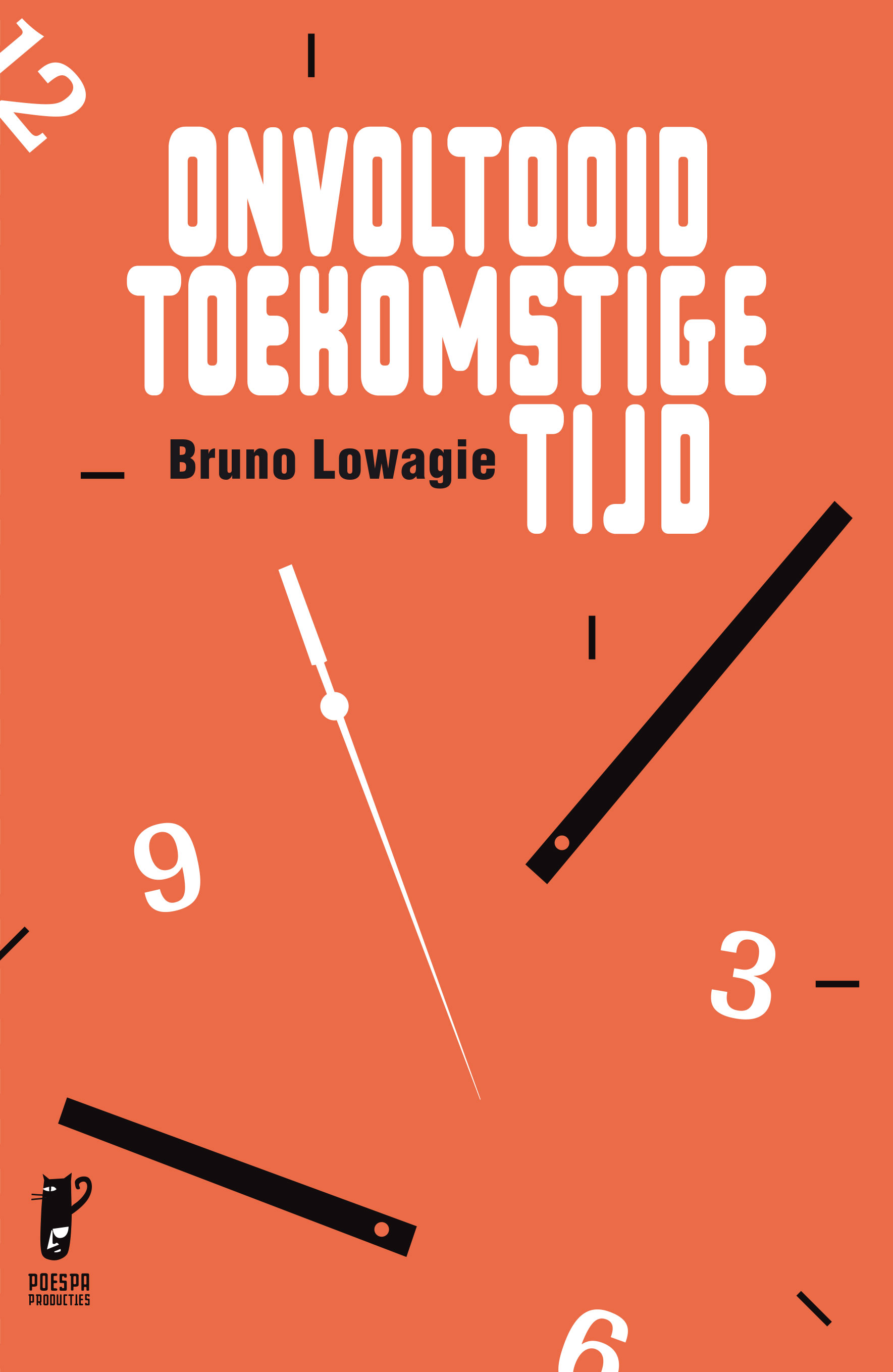
Onvoltooid toekomstige tijd
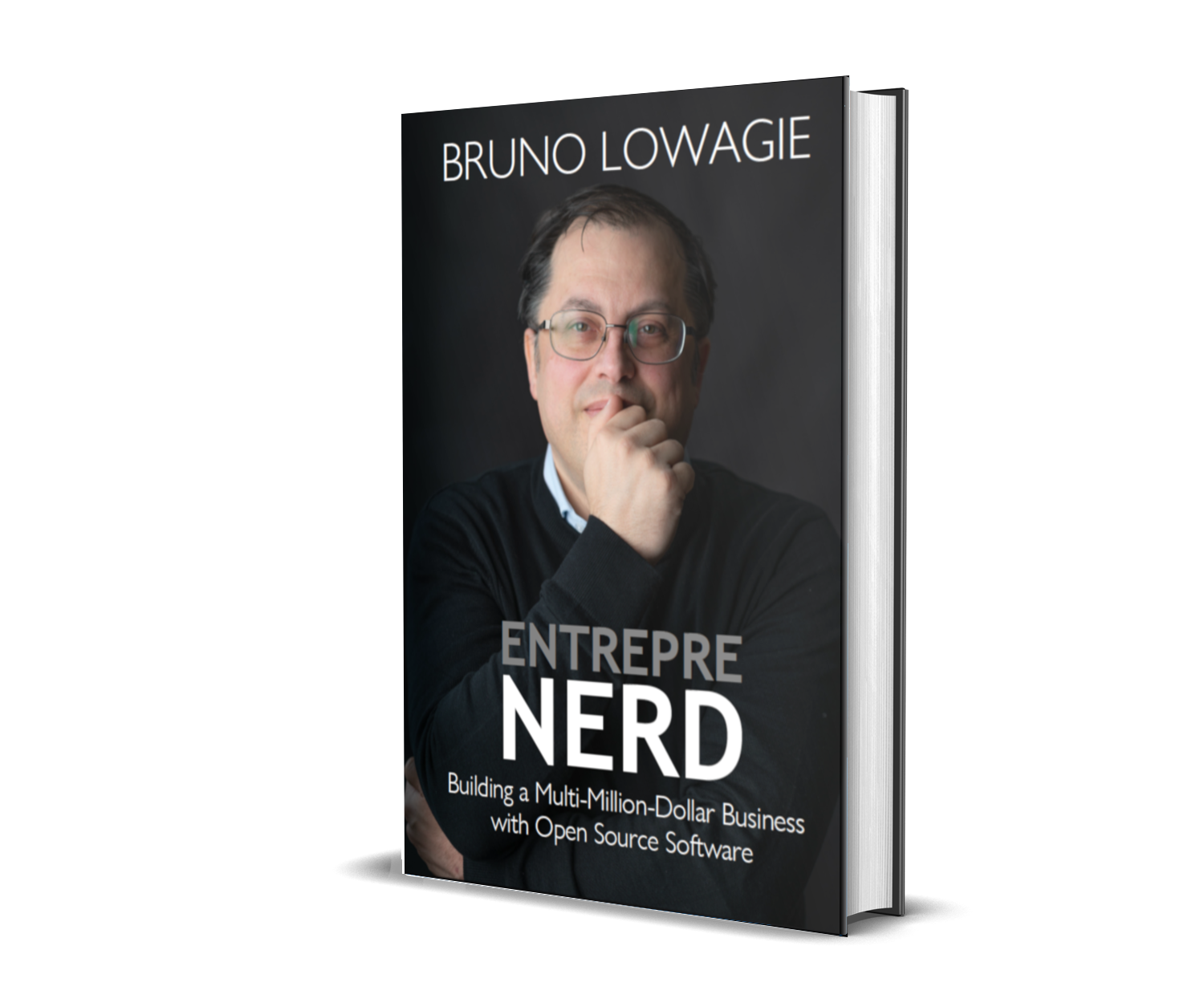
Entreprenerd
Wintercircus

Blog
- 2026-08-25:
Heart and Stone: Read the Prologue - 2026-07-11:
Gatachterlijk - 2026-07-09:
Ego's (deel 2)